
In the heart of the forest, a shop waits for travelers
They say the Blackthorn grows around an old workshop. Those who find the door do not buy ordinary dice: they leave with fragments of fate.

Roll the Thorn. Shape your Fate.
Workshop Codex
One page to understand Blackthorn Dice: the world, dice, handcraft and important answers.
The Legend
They say the Blackthorn grows around an old workshop. Those who find the door do not buy ordinary dice: they leave with fragments of fate.
Fragments
The founding steps of the Blackthorn world, from the old forest to the tavern.
The paths close behind the curious. Only roleplayers guided by chance reach the glow of the workshop.
Each collection receives a name, color, rarity and short lore before the first pour.
Resin, pigments, inclusions, inking and polishing turn the material into a playable artifact.
The real magic begins when the die leaves the workshop and joins a campaign table.
Advice
A few pointers to choose a set, a signature D20 or a percentile pair for your table.
Start with the way you play: a full set for a campaign, a signature D20 for key rolls, or a percentile pair for loot tables. Then choose a rarity and palette that fit your character.
Handcrafted resin dice are tactile objects too: weight, readability, inking and finish change the pleasure of rolling. Each Blackthorn relic is designed to be playable, visible and memorable.
Blackthorn Dice
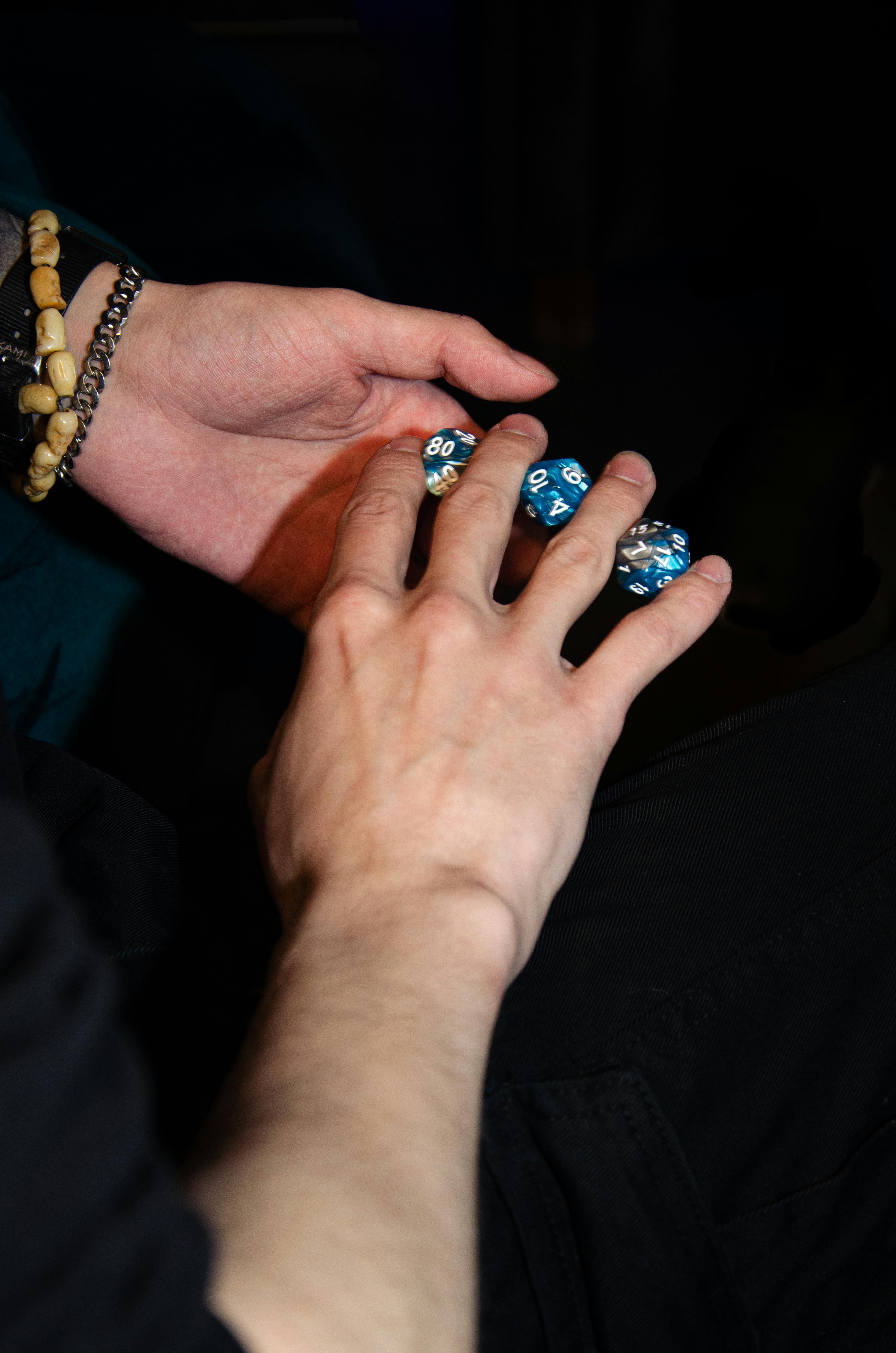
Blackthorn Dice blends RPG aesthetics, collectible objects and one simple standard: a die should be beautiful, but also pleasant to read and roll during a real session. The visual universe is dark, but the product should never become unreadable: the magic serves the table, not the other way around.
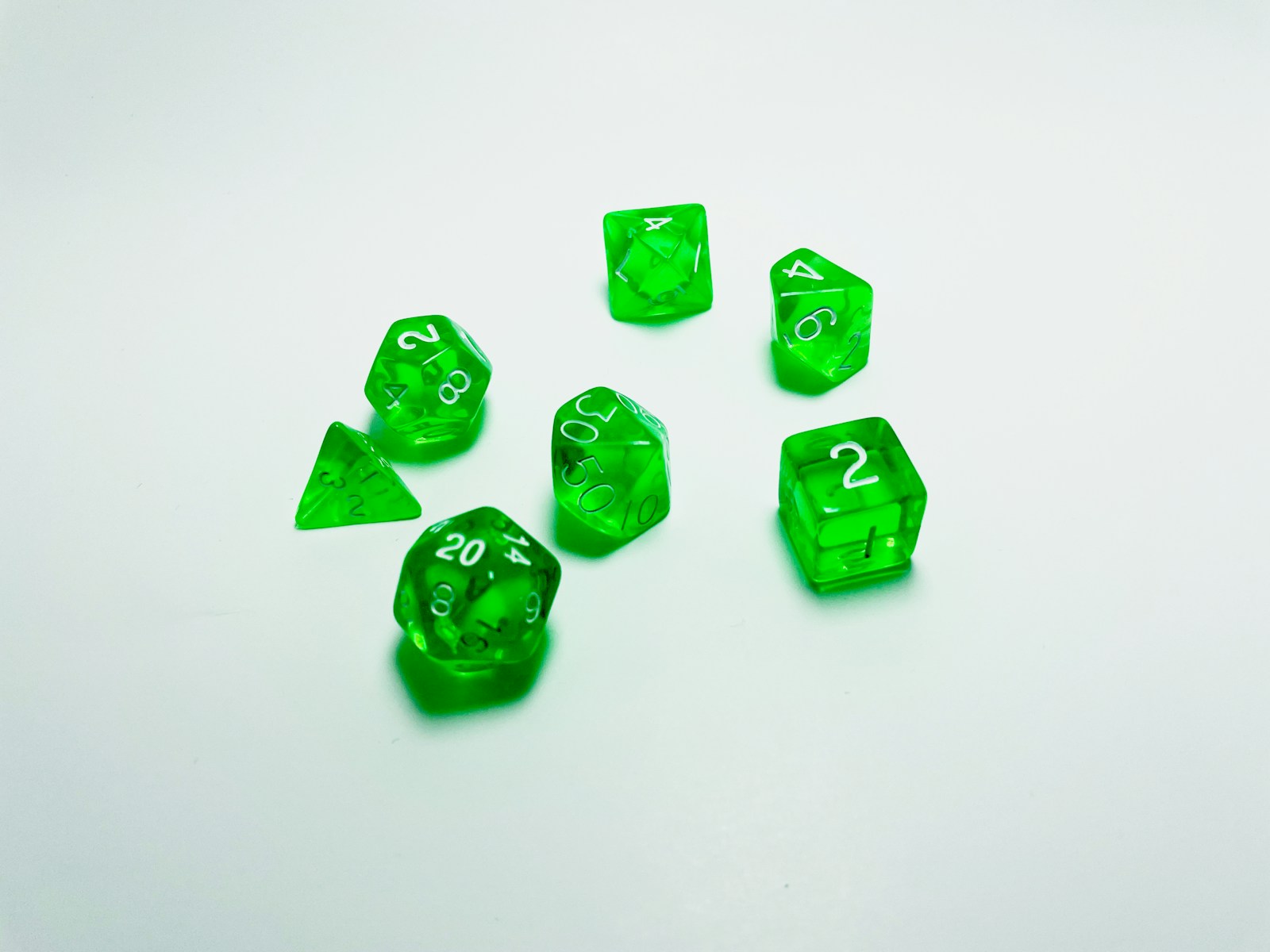
Collections are designed as fragments of a world: strong enough to tell something, clear enough to stay useful when the session speeds up. A set should follow a character through a whole campaign, catch attention on important rolls and keep its presence even when it waits beside the character sheet.

Every dice sold on this site is handmade by us. We choose not to import dice from other retailers or wholesalers to guarantee you exceptional quality from one set to the next, without any worries.
Each set is unique; variations are possible on the same model.
To see the creation process, visit the Codex.
All accessories included with your dice and shipping materials (pouches, envelopes, etc.) are sourced from Europe, with priority given to products made in France whenever possible.
Workshop
The creation steps behind Blackthorn relics, from resin to final polish.
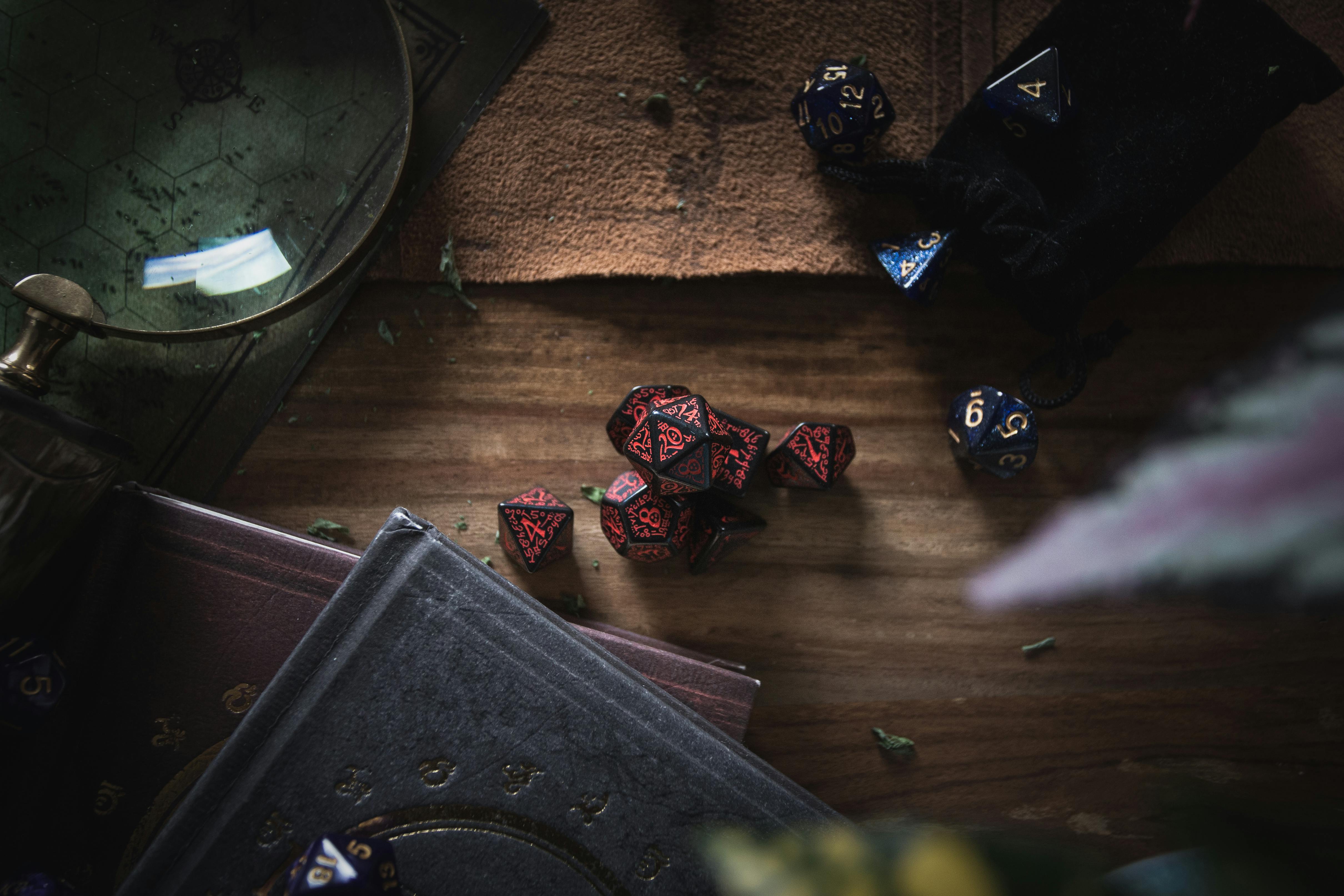
Each series starts with a table intention: readability, mood, rarity, palette and campaign use. The workshop prepares a small production grimoire with dominant color, number contrast, allowed inclusions, mold type and expected finish after polishing. The goal is not only to make a beautiful die: it must tell something and stay readable during play.
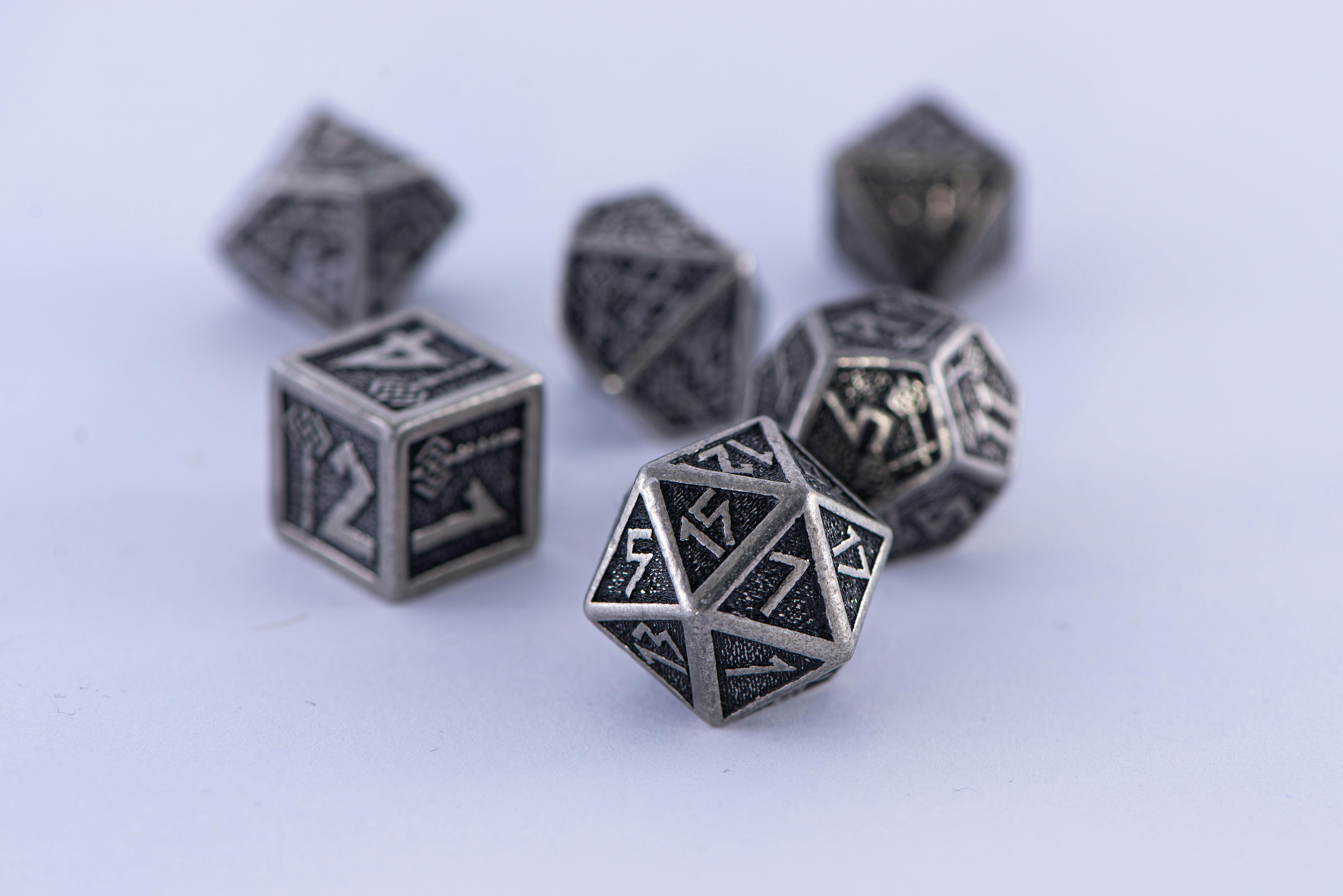
Molds are prepared before every pour: cleaning, face checking, number inspection, possible grip points and mold choice depending on the desired result. A mold that is too worn, poorly closed or poorly prepared can create flashing, uneven faces or loss of number detail. This step is quiet, but it already decides a large part of the final quality.
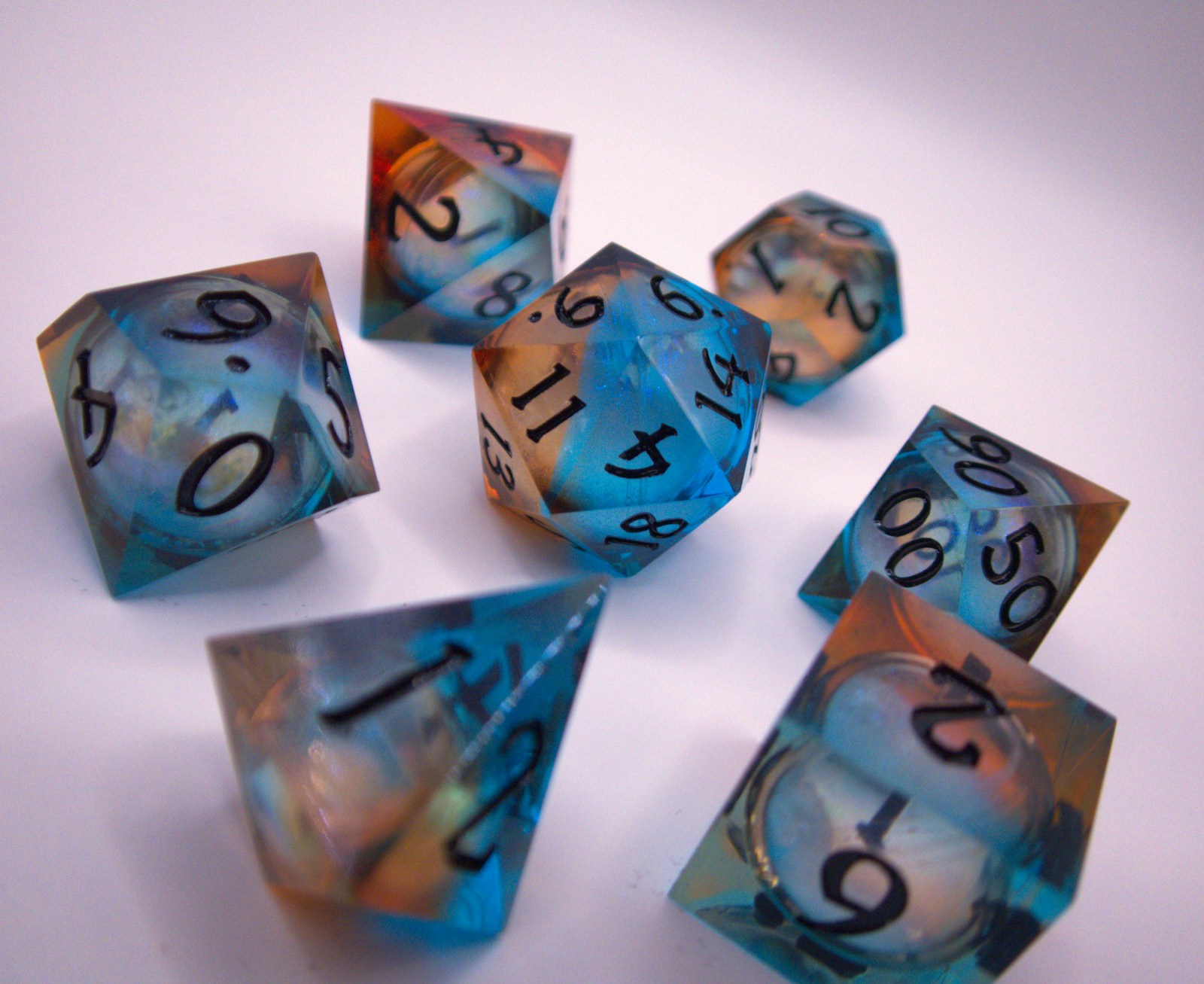
Resin is measured precisely, then gently warmed when the batch requires it. Slightly more fluid resin helps limit some bubbles and makes the pour easier in mold details. Heat stays controlled: too much can accelerate the reaction, reduce working time or damage the final look. Pigments, powders and inclusions are prepared separately to keep the pour clean.
The pour is done slowly, often in several passes, to keep control over colors and depth. Pigments are not simply mixed at random: the workshop plays with transparency, color veils, metallic powders, fine glitter or more visible inclusions. Every choice is measured to preserve number readability and avoid a spectacular but confusing die.
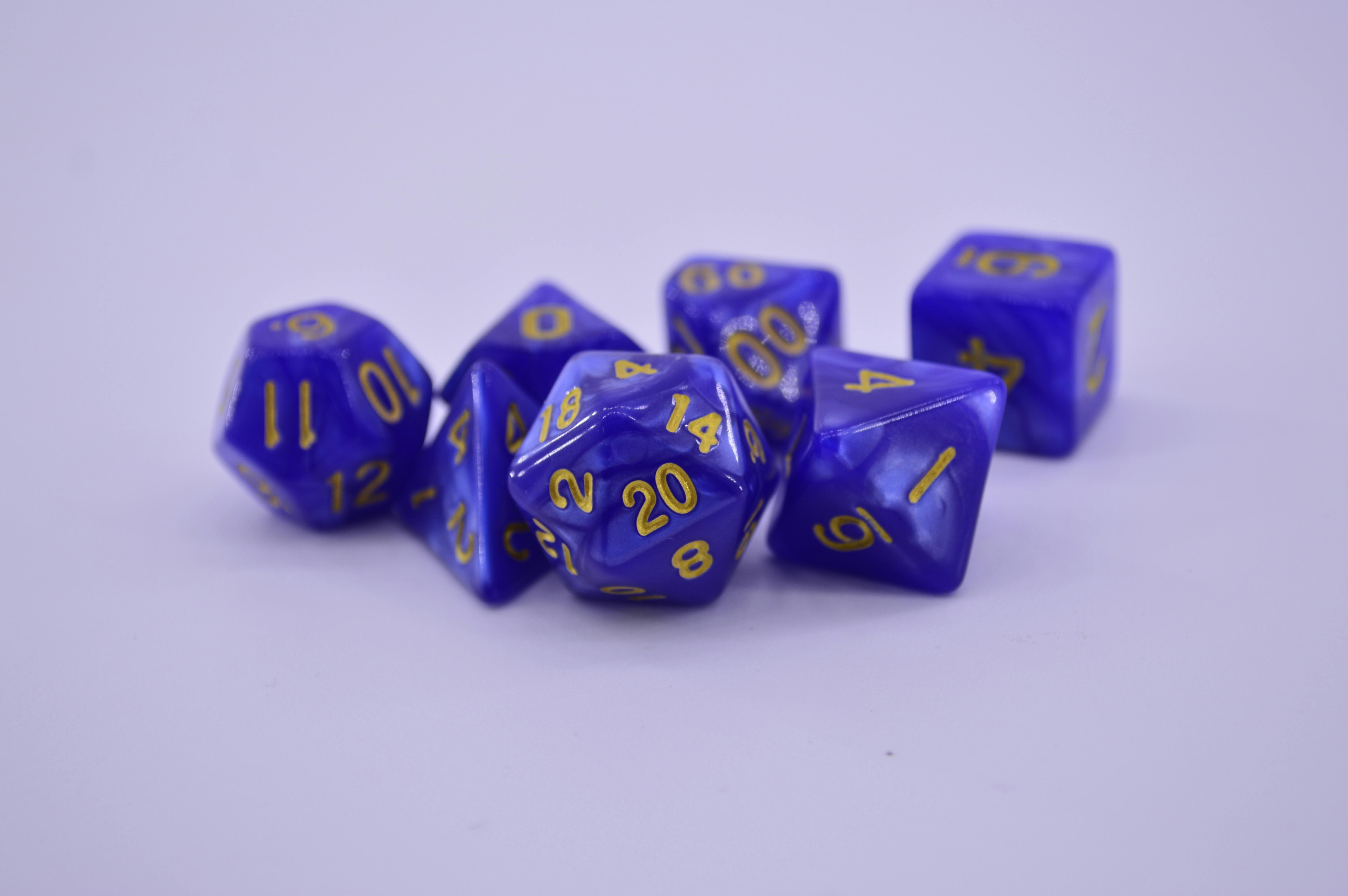
After the pour, molds go into the pressure pot. Pressure strongly reduces visible bubbles, densifies the material and gives cleaner faces after demolding. Time under pressure depends on the resin, workshop temperature and set complexity. This step changes the final result a lot: without it, even a beautiful color can lose its premium feel.
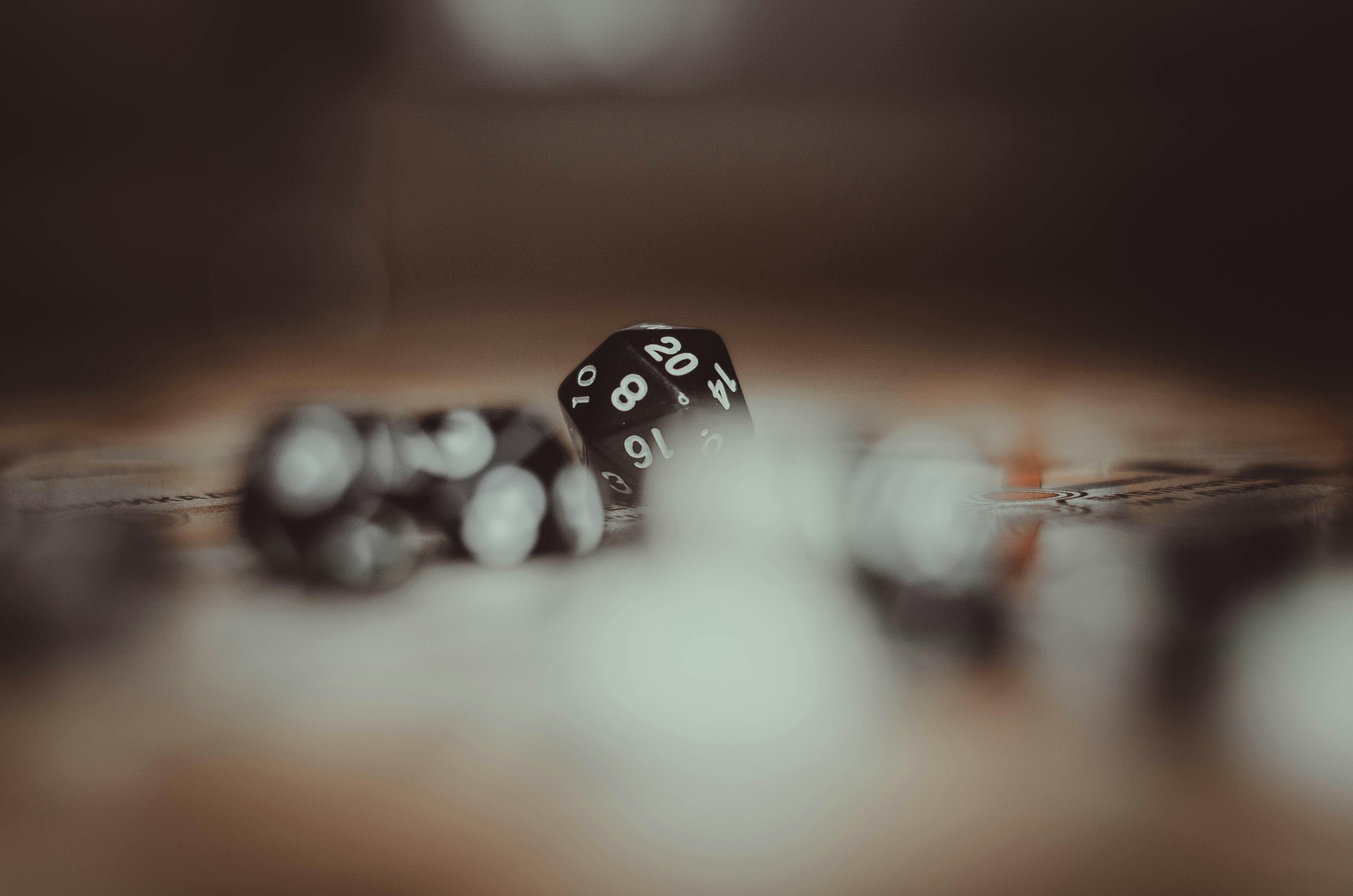
Dice then stay in cure long enough to reach stable material. Depending on the batch, the workshop can use a drying box or low-temperature drying machine to stabilize the environment, avoid sudden variations and obtain a more regular cure. This step requires patience: demolding too early can mark faces, soften details or weaken edges.
Once resin is ready, each die is carefully demolded. Small mold lines, flashing or excess material are removed progressively. The workshop also checks numbers, points, edges and transparent areas. This is the first real quality check: some pieces go straight back to rework if they do not deserve the Relic Vault.
Sanding is done in stages, with progressively finer grits. It corrects rough spots, restores faces, prepares edges and avoids eating into the numbers. This phase is slow, repetitive and very visible to the touch: good sanding gives the die its clean feel, while rushed sanding leaves a dull or uneven piece.
Inking gives the set its final character. Copper, ivory, gold, dark red or colder contrast: number color is chosen to support the lore without sacrificing readability. Each number is filled, cleaned, checked and corrected if needed. Good inking must read quickly, even when the table is dark or busy.

Polishing reveals resin depth. It removes the haze left by sanding, brings inclusions forward and gives the die its final feel. Depending on the desired result, the workshop looks for a mirror polish, a softer shine or a finish that keeps a mineral touch. The set is then cleaned before final control.
Before reaching the Relic Vault, each series is observed under several lights: warm lamp, daylight and the dimmer mood of a gaming table. The workshop checks readability, reflections, set consistency, visible flaws and hand feel. A Blackthorn die must look good in photos, but above all stay readable and pleasant during a real session.
FAQ
Short answers, neatly arranged to keep the page readable.
Handcrafted resin dice are made for tabletop role-playing, not casino use. Each piece is visually checked, sanded, polished and designed to stay readable in play. Inclusions are chosen to preserve the roll and avoid effects that are too heavy or poorly distributed.
Each piece is poured, sanded, inked and polished by hand. Slight variations in color, depth or inclusion can appear from one die to another. They are not flaws when they do not affect readability or use: they are part of the relic handcrafted identity.
Avoid heavy impacts, direct heat, solvents and abrasive surfaces. Store your dice in a pouch, box or separated compartment if you carry several sets. For everyday care, a soft cloth is enough to remove fingerprints and keep the polish clean.
When the order leaves the workshop, the tracking number and carrier link are added to your order chronicle. If automatic emails are enabled, you also receive tracking directly by email. Details remain visible from your customer Grimoire.
Yes, when the workshop opens custom order slots. A clear request works best with a palette, a character mood and a readability constraint. The workshop can refuse an idea if it risks producing a die that looks good in photos but is not practical at the table.